
There is nothing more stressful for an independent product founder than logging into your marketplace portal and seeing a flatlined revenue graph. One week your team is drowning in packing tape and printing invoices; the next week, the incoming order notification sound goes completely silent.
When your wholesale volume hits an unexpected cliff, it is easy to panic and assume your brand is losing its touch or that your search rankings have completely broken.
But wholesale marketplaces do not operate in a vacuum. Before assuming there is a technical malfunction or an algorithmic penalty on your account, it is vital to map your sales drops against the natural, predictable seasonal rhythms of the global B2B retail calendar.
At Sona Wholesale Consulting, we look at marketplace data through a deeply experienced, operational lens. If you are wondering why your volume took a sudden dive, here is the exact diagnostic framework our team uses to separate normal seasonal lulls from genuine backend account issues.
1. The Post-Market Hangover: The Natural March and April Dip

If your revenue hit a sudden cliff at the end of March and stayed quiet throughout April, you are likely experiencing a completely normal retail cycle rather than an account penalty.
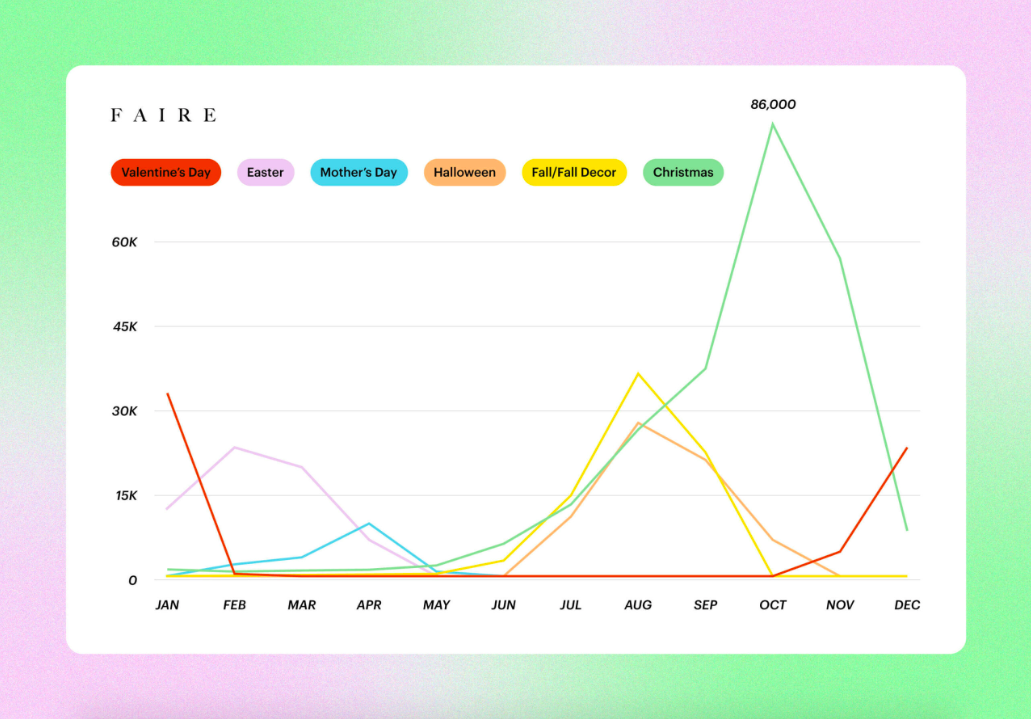
Wholesale buying operates on highly specific seasonal waves. January, February, and early March are characterized by massive buying frenzies as retailers rush to attend the virtual Faire Winter Market and aggressively restock their shelves after the busy winter holidays.
By the time late March and April arrive, independent boutiques are inventory-heavy, waiting for their spring stock to sell through to consumers, and tightening their wholesale budgets.
This post-market lull is an industry-wide norm. Experienced founders use this predictable April downtime to optimize their listings, audit their margins, and prep their catalogs for the next massive buying surge rather than panic-discounting their products.
2. The May Rebound: Summer Stock Preparation

If your account is set up correctly, that quiet spring lull naturally breaks as May arrives. May marks a sharp, industry-wide increase in sales as retailers clear out their spring lines and begin actively sourcing their warm-weather summer stock and travel-season inventory.
This annual retail order cycle follows a highly predictable trajectory that every product brand must master. The year kicks off with a massive buying frenzy from January through early March, driven entirely by the virtual Winter Market and post-holiday store restocking.
This leads straight into the normal spring lull of late March and April, where boutiques temporarily pause ordering while they focus on selling that fresh inventory through to daily consumers.
Once May and June arrive, volume spikes significantly as shops prepare for the busy summer travel months. This warm-weather momentum builds directly into the massive July Summer Market, which represents the absolute peak global ordering window of the year.
The July market acts as the critical kickoff for the entire second half of the fiscal year, feeding directly into the highly lucrative autumn and winter shopping seasons where retailers secure their high-volume holiday and gifting stock. If your brand misses out on the May and July upswings, that is a definitive indicator of an underlying algorithmic issue rather than a seasonal trend.
3. Check Your Operational Health Metrics
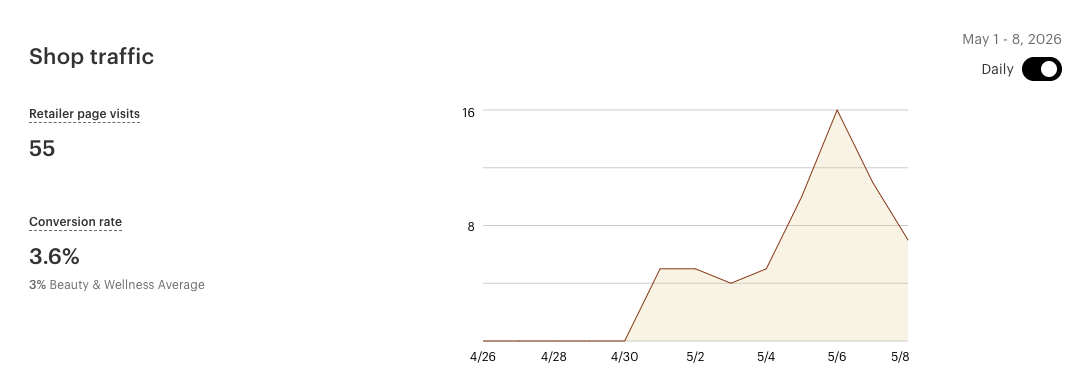
If your sales dropped outside of these predictable seasonal windows, you must look at your internal account health dashboard. The platform's search algorithm prioritizes buyer experience above everything else. If your operational metrics slip, your search visibility is immediately penalized.
Have you canceled an order recently due to inventory errors? Did an international shipment miss its ship-by window, triggering a late-delivery flag? Did your average messenger response time slip past the critical 24-hour mark during a busy production week? Even a minor operational infraction can cause the algorithm to instantly strip away your premium ranking spots and hand them to a competitor with a flawless fulfillment score.
4. Audit Your Top-Volume Search Positions

If your seasonal timing is right but your numbers are still down, your organic real estate may be under attack. Search visibility is dynamic, not permanent. If the bulk of your wholesale revenue was being driven by two or three highly competitive search terms such as Everyday Luxury, Eco-Friendly Gifts, or Small Batch Skincare, a sudden drop usually means you have lost your prime Page 1 positioning.
Log out of your account, open an incognito browser window, and search for your top-performing search queries from a buyer's perspective. If your listings are no longer in the top rows, an aggressive competitor has likely optimized their backend keywords, launched a targeted ad campaign, or undercut your pricing to steal your organic traffic.
The Recovery Strategy: How Sona Restores Your Market Position
You do not have to sit back and guess whether your sales drop is a normal seasonal shift or a broken backend algorithm. When a brand partners with Sona Wholesale Consulting, we deploy a comprehensive, data-driven diagnostic protocol to maximize your position in every retail season:
We audit your operational workflows to resolve backend flags and quickly repair your algorithm standing.
We perform competitive keyword intelligence to reclaim lost Page 1 visibility ahead of major market events.
We systematically prepare your visual merchandising and catalog layout in April so you are perfectly positioned to capture the May and July buying surges.
We install automated reorder sequences to systematically reactivate your dormant retailer database right when they are budgeting for holiday stock.
Learn more about our Faire Storefront Optimization Service!
Stop Guessing. Let’s Fix Your Sales Engine Today.

A sudden dip in revenue is simply a symptom of an underlying issue whether it is an unoptimized catalog missing a seasonal wave or a hidden operational flag. The faster you diagnose the cause and implement professional, platform-specific optimization systems, the faster you can confidently navigate the retail calendar and keep your products moving onto global retail shelves.
Discover how we rescue and scale underperforming digital storefronts by diving into our real-world execution metrics on our case studies page, and see how we help founders protect their wholesale margins by reading our verified client testimonials.
Let's stop guessing why the notification sound stopped. Let's look over your seasonal data and fix the leak together.
📞 Click Here to Book Your 1-on-1 Emergency Audit Call
Let’s audit your storefront backend, isolate the exact cause of your sales drop, and build an immediate seasonal recovery roadmap for your brand.
